To enhance your experience, we use cookies. Cookies help us optimize the website and collect statistics.
You can adjust your cookie preferences by clicking on the 'Cookie preferences' button. Here you can specify which types of cookies you want to accept or reject.
Porthos is the first large-scale CO2 transport and storage project to be realised in the European Union. In this project, CO2 from the Rotterdam port industry will be captured, transported and safely stored in depleted gas fields deep under the North Sea bed.
Porthos is the first large-scale CO2 transport and storage project to be realised in the European Union. In this project, CO2 from the Rotterdam port industry will be captured, transported and safely stored in depleted gas fields deep under the North Sea bed.
Construction of the CO2 infrastructure is well under way. Porthos will make a significant contribution to achieving the climate goals with the storage of CO2. Customers of Porthos deliver the captured CO2 from industry in the port of Rotterdam to a collecting pipeline. This is transported via a 30-kilometre onshore pipeline through the Rotterdam port area to a compressor station where the CO2 is pressurised for efficient onward transport to a platform in the North Sea, about 20 kilometres off the coast. The gas production platform located here will be adapted for reuse by Porthos; from here, the CO2 is injected into depleted gas fields that are converted to injection wells at a depth of three to four kilometres under the North Sea. The system is expected not to be operational before the second half of 2027.
Porthos will store around 37 million tonnes of CO2 in total, equivalent to 2.5 million tonnes per year for 15 years. The infrastructure is deliberately overdimensioned so that future CO2 projects can connect to it.
Porthos is a collaboration between Gasunie, the Port of Rotterdam Authority and EBN. Thanks to our combined expertise, this project is being made possible. The European Union has recognised Porthos as a Project of Common Interest which means it contributes to the integration of energy systems within the EU and is eligible for accelerated permitting procedures and funding.
Milestone reached: Porthos wells ready for CO₂ injection
Date
At the end of January, an important milestone was reached in the offshore works for the Porthos project, with the successful completion of well activities in the North Sea. Four former gas production wells have been converted into CO2 injection wells, while three additional wells have been safely sealed and permanently decommissioned. As a result, the underground access points are now ready for the injection and secure storage of CO2 deep beneath the seabed.
Last spring, the offshore pipeline was pulled under the sea wall to land. This pull-in allowed us to start laying the offshore pipeline — a route of around 20 kilometres across the bottom of the North Sea, from the compressor station on the Maasvlakte to platform P18-a. At the end of July, the final meters of the Porthos offshore pipeline were laid.
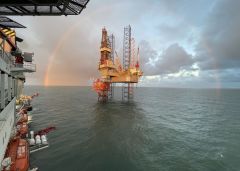
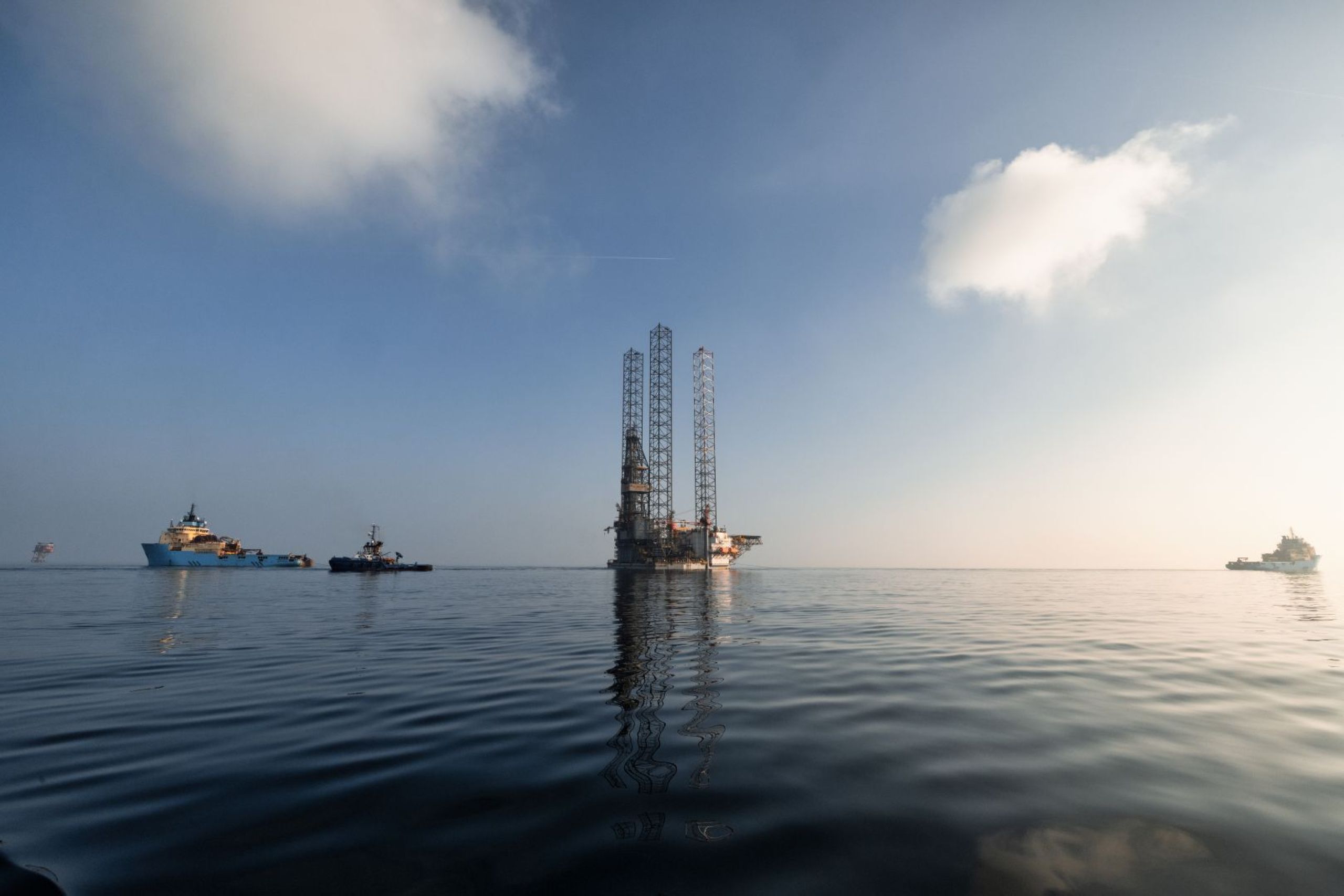
With the arrival of the Valaris rig, offshore works for the construction of the Porthos infrastructure have visibly started. The drilling rig will be used to permanently plug the former P18 exploration wells. The P18 exploration wells were drilled in the past to form a good picture of the gas fields; no gas was ever extracted from these wells.
Porthos lays foundations for future European CCS projects
Date
Construction of the Porthos CCS project in the port area of Rotterdam is well underway. It is the first CO2 transport and storage project of this scale in the European Union to be realised. Porthos is the start of much more, it’s laying the foundations for future CCS projects in north-west Europe.
First CO₂ storage project in the Netherlands is launched
Date
Porthos has made the final investment decision. This will allow construction of the first major CO2 transport and storage system in the Netherlands to start in 2024. A major milestone for Carbon Capture & Storage (CCS) in the Netherlands and for Gasunie as co-initiator.
State Council ruling: Porthos project may go ahead
Date
On 16 August, the Council of State gave its final decision in the nitrogen case on CO2 transport and storage project Porthos. The Council of State ruled that the ecological study sufficiently demonstrated that the nitrogen deposition of Porthos has no significant effects on nearby nature areas. The final investment decision is now being prepared by the Porthos organisation. Construction is expected to start in early 2024.
Interim ruling by Council of State delays Porthos project
Date
The Council of State ruled on Porthos’s use of the statutory construction exemption. This exemption meant that nitrogen emissions from project construction did not require a permit. The interim ruling by the Council of State will delay the Porthos project.