
Heat grids: a sustainable way to heat
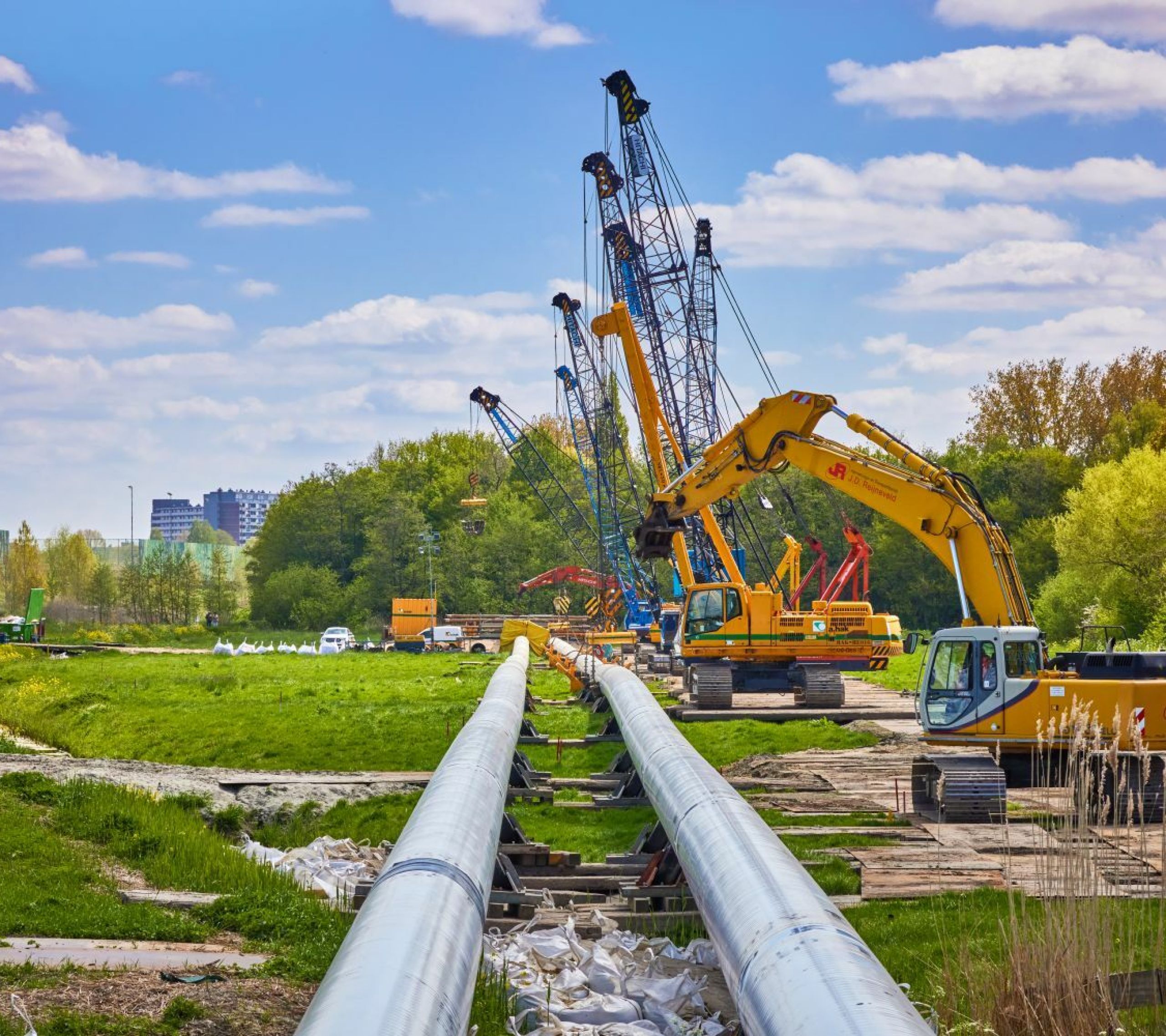
A heat grid, also called district heating, uses hot water to transfer heat from a heat source to buildings in a city or district. The heat source can be an industrial plant, data centre, waste incinerator, geothermal plant, etc.
The Netherlands wants to become more sustainable, with lower carbon emissions and less use of natural gas. That is how we are fighting climate change. In urban areas, the use of district heating is a cost-effective, sustainable option. With this in mind, Gasunie is investing in infrastructure for sustainable heat. Gasunie can transport the heat from the source to the heat grid over a transmission main (central pipeline).
Heat grids in a nutshell
- A heat grid is an underground system of insulated pipes that supplies hot water to homes, but also to commercial greenhouses, for example.
- The water in the district heating network is very hot because heat is connected via a transmission main (central pipeline) to a sustainable source such as waste heat (from an industrial plant, for example).
- In the Netherlands, some 500,000 homes are connected to district heating.
- Gasunie is currently developing WarmtelinQ, an underground transmission main running through the province of Zuid-Holland to transport heat originating from the Port of Rotterdam. This supply pipeline carries the heat to distribution networks that deliver the heat to homes and businesses. Other parties produce, distribute and supply the heat. The energy transition will make other sources of heat available, like the heat released during electrolysis in hydrogen production. This heat, too, can be used to supply heat grids with hot water. And this will help combat climate change.
What is a heat grid?
A heat grid is a system of pipelines and heat exchangers that transport heat from a central heat source to multiple buildings in a city or district. The heat is transported by means of hot water.
How a heat grid works, in 4 steps
- A heat grid uses a heat source. This can be a power station, a waste incinerator, a geothermal plant or an industrial plant. The heat source produces hot water or steam that is transported by pipeline to one or more distribution (district heating) grids.
- A district heating grid (often owned by an energy supplier) is a densely-branched network that supplies heat to the buildings connected to the network. The hot water or steam circulates through the pipelines and releases the heat once it reaches the buildings.
- Heat exchangers are installed in each building. These extract the heat from the water or steam and deliver it to the building’s heating system. Heat exchangers are also needed to adjust the temperature of the water or steam to the requirements of the building.
- The cooled water coming from the buildings is looped back to the heat source to be reheated.
District heating is a sustainable means of heating, right now and in the future too
District heating is sustainable because the homes and buildings connected to the grid do not have to use natural gas for heating. This reduces greenhouse gas emissions. In many cases, district heating also uses waste heat that would otherwise simply be wasted. Moreover, the water or steam in a heat grid can also be heated using various renewable energy sources, such as geothermal energy, biomass and solar energy. The hydrogen production process also releases heat, and this could eventually be used in heat grids too.
Advantages of a heat grid
Heat grids have a number of advantages over heating with natural gas:
- Heat grids are a more sustainable alternative because they use waste heat. Because this eliminates the need for central heating boilers and gas-fired power stations, this cuts carbon emissions significantly.
- District heating saves on natural gas for heating and so enables homes to switch from natural gas sooner.
- In most cases, the heat from the district heating network can be delivered to the existing underfloor heating system or radiators through a heat exchanger, meaning adjustments to connect a building to the grid are generally minimal.

Gasunie provides the transmission from the heat source to the district heating network
A heat grid of course needs to be supplied with heat. Gasunie installs the pipelines that connect the heat source to the district heating network. At the moment, Gasunie is working on two projects. Gasunie is constructing WarmtelinQ in the province of Zuid-Holland, while in Groningen it is investigating the feasibility of installing a heat transmission pipeline between the municipality of Eemsdelta and the City of Groningen.
WarmtelinQ transports waste heat for homes and businesses in the province of Zuid-Holland
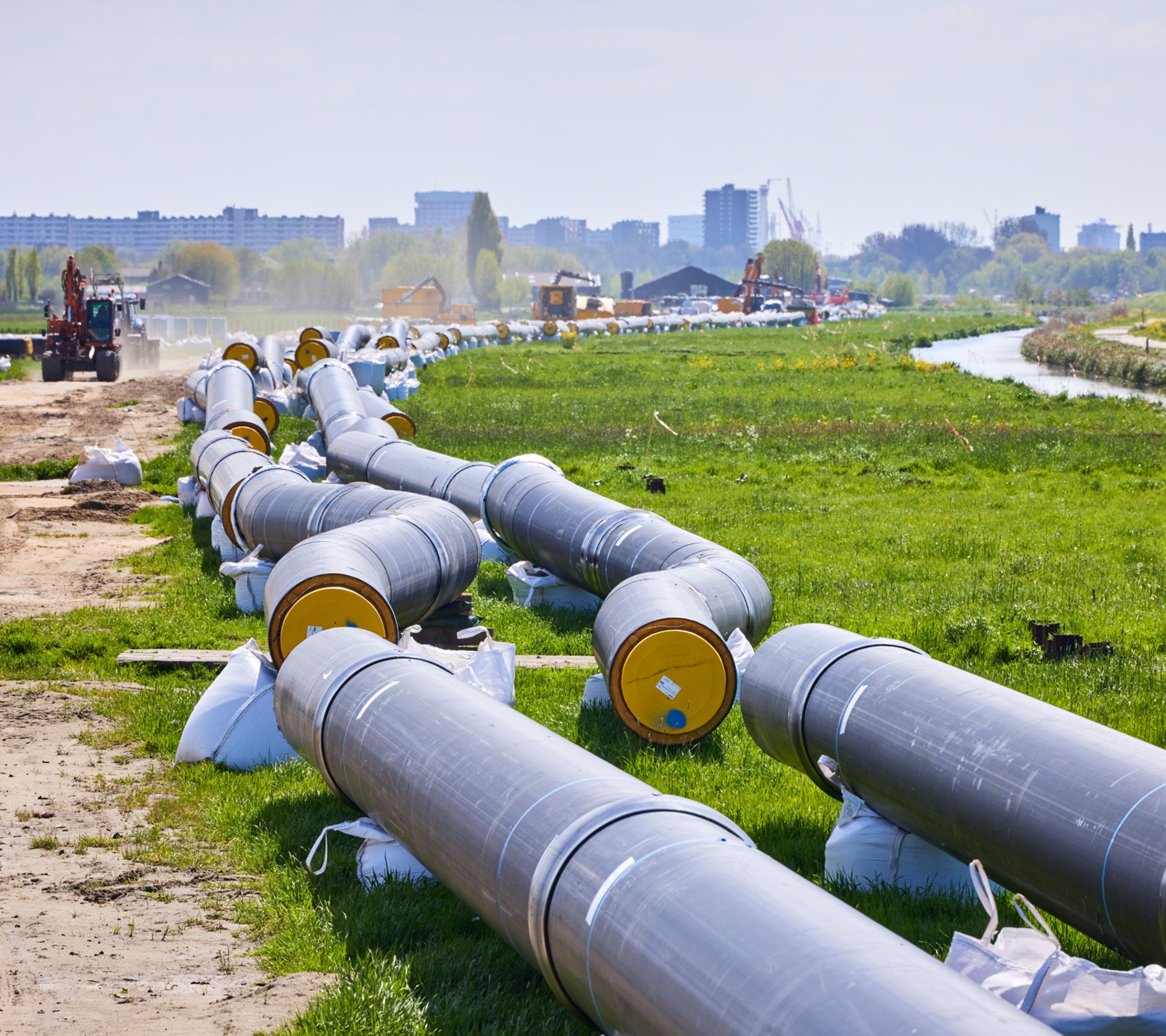
With WarmtelinQ, Gasunie is installing an underground transmission main in the province of Zuid-Holland. Waste heat will soon be transported from the Port of Rotterdam to district heating networks in the province through this underground transmission main. This heat will be delivered to the connected homes and businesses through the local district heating network.
The pipeline will run through Vlaardingen, Delft and Rijswijk to the existing district heating network in The Hague. There will also be a branch transporting heat to the existing network in Leiden. Furthermore, the feasibility of having a branch running to the commercial greenhouse operations in Westland and Oostland is being examined.
The total capacity of the main transmission grid would serve around 120,000 homes. The district heating networks to which WarmtelinQ is being connected have up to now been supplied with waste heat from gas-fired power stations. Now that production from these power stations is being phased out as part of the energy transition, the waste heat from the Port of Rotterdam offers a good alternative.
WarmtelinQ construction schedule
On 8 November 2021, Gasunie made the final decision to build the pipeline section between Vlaardingen and The Hague. Construction started in early 2022. In July 2022, construction of the underground heat pipeline from Rijswijk to Leiden also received the official go-ahead. Work on this extension between Rijswijk and Leiden started in the spring of 2026.
The pipeline in The Hague will be filled and tested in 2026. The pipeline between Vlaardingen and The Hague is expected to be taken into operation during the 2026/2027 heating season. The pipeline onwards to Leiden is expected to be taken into operation in the autumn of 2028.
Since heat from the pipeline can also be used in commercial greenhouses, possibilities for branch connections to the Westland and Oostland horticultural clusters are currently being explored.
Only limited loss of heat
Even though the waste heat from the Port of Rotterdam will have to travel about 26 kilometres before it is connected to the district heating network in The Hague, the loss of heat will be limited. A mere 4% of the heat will be lost during this process. The temperature in the pipelines is kept constant, partly by properly insulating the pipes and by optimising the flow rate.
New Dutch law on heating in the context of the energy transition
As part of the climate plans, virtually all homes will have been weaned off natural gas by 2050. Heat grids and district heating offer an alternative to heating commercial greenhouses and homes with natural gas.
An energy supplier has a monopoly position on a heat grid. This means that a household cannot choose another supplier. The Dutch law on heating sets out the rights and obligations of consumers and suppliers and protects consumers against excessively high prices.
A draft Dutch law on heating is currently going through the legislative process. It is expected that this new legislation will come into force early in 2025. With the new law, the government aims to encourage the construction of more district heating networks. Under the new legislation, heating tariffs are based on the actual costs incurred, allowing parties to better recoup the costs of constructing new heating networks.
Gasunie has been designated to construct the main transmission grid (WarmtelinQ) in the province of Zuid-Holland.