To enhance your experience, we use cookies. Cookies help us optimize the website and collect statistics.
You can adjust your cookie preferences by clicking on the 'Cookie preferences' button. Here you can specify which types of cookies you want to accept or reject.
The Netherlands is working on a sustainable future, which is why Gasunie wants to contribute to the construction and operation of main heat transport pipelines.
The Netherlands is working on a sustainable future, which is why Gasunie wants to contribute to the construction and operation of main heat transport pipelines.
Heat networks are a sustainable alternative to natural gas in urban areas, helping to reduce pressure on the power grid. Gasunie’s biggest and most important heat project by far is WarmtelinQ, the regional main heat transport pipeline in the province of Zuid-Holland. Thanks to this heat transport network, waste heat from the port of Rotterdam is used to heat some 120,000 homes and business premises.
Route
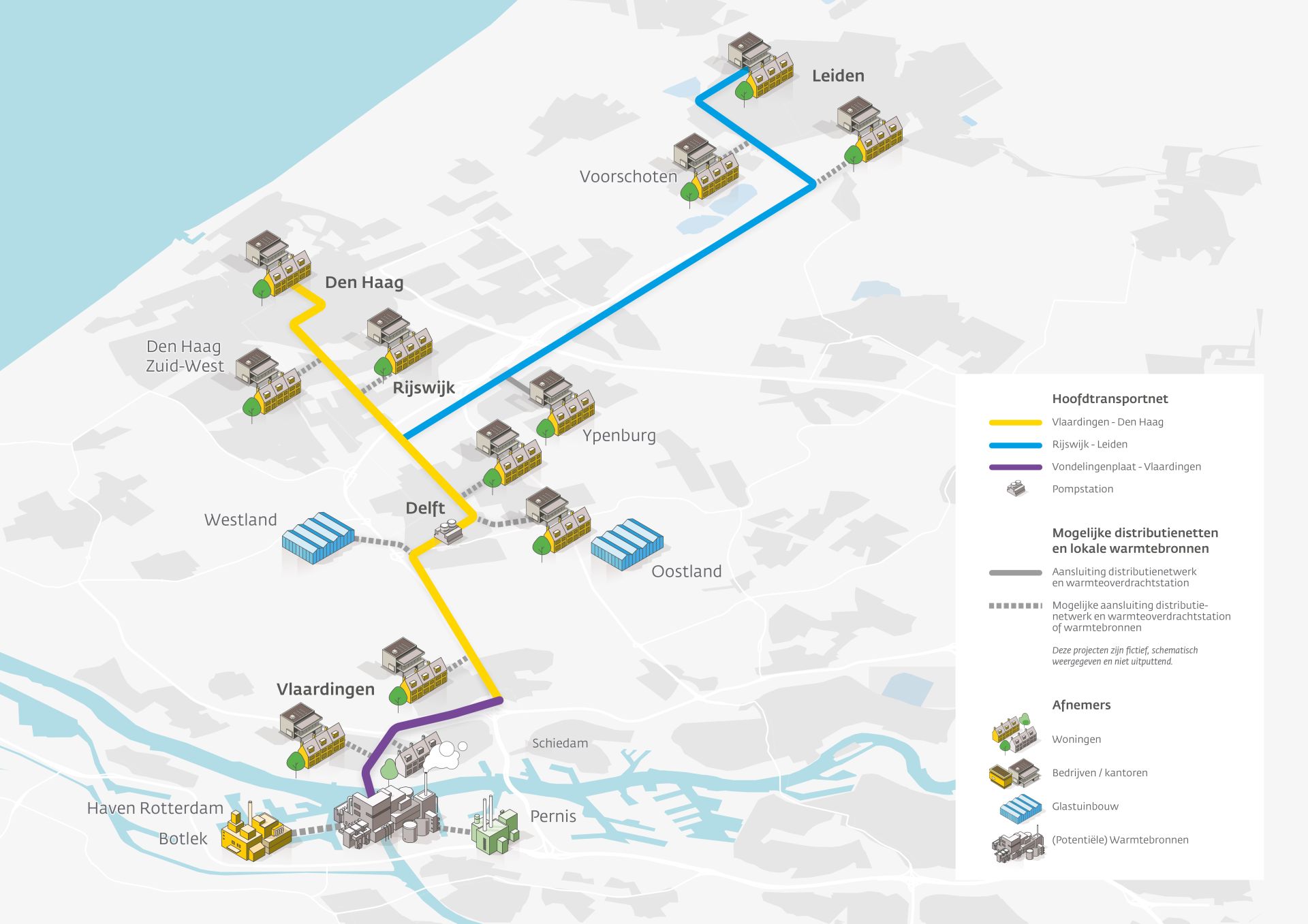
The heat transport network runs from the port of Rotterdam and continues through Vlaardingen to The Hague and through Rijswijk to Leiden. From these locations, local heat networks distribute the heat to residents and businesses.
Heat that would otherwise go to waste in the port of Rotterdam gets a second lease of life with WarmtelinQ. This is sustainable energy, generated in the Netherlands, that helps to ensure energy independence for the future.
Largest heat transport project in the Netherlands reaches major milestone
Date
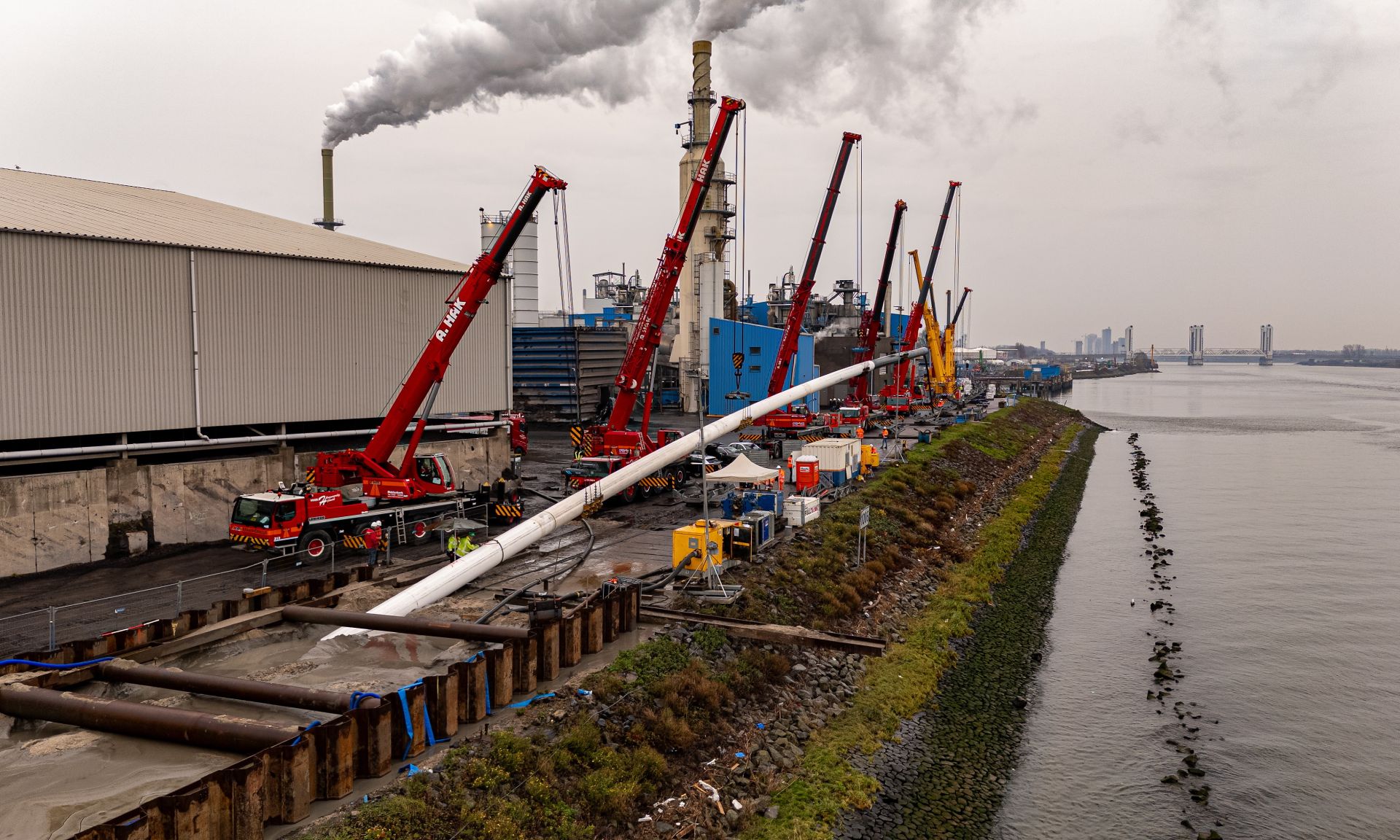
WarmtelinQ is currently working at full speed to complete a remarkable construction milestone for the heat transport network linking Rotterdam, The Hague and Leiden. A heat transport pipeline measuring no less than 1,562 metres is being installed underground using horizontal directional drilling (HDD). The work is expected to be completed later today.
WarmtelinQ starts work on Rijswijk–Leiden heat transport network
Date
WarmtelinQ has started work on the heat transport network between Rijswijk and Leiden this month. This route is an integral part of the pipeline that will run from the port of Rotterdam to The Hague and on to Leiden.
WarmtelinQ pipelines to be used for EemsEnergyTerminal
Date
Gasunie is working on the construction of a floating LNG installation at Eemshaven (Groningen), which should be ready by next winter; this project is backed by the Dutch government and aims to minimise dependency on Russian gas.